Zero to one while the business keeps running.
I stepped into a reorganization: a new boss, a newly formed team, and a new direction for the business, shifting from delivering imagery to delivering AI-powered intelligence.
The new AI Applications portfolio had three immediate priorities: launch Site Sentry, a new AI monitoring and alerting product; modernize a legacy platform and integrate it with the new experience; and continue supporting paying customers across the existing portfolio. All three had to move at the same time.
I led product strategy, roadmap, launch readiness, and cross-functional execution for Site Sentry while establishing the operating model for the new AI Applications portfolio.
Because the work drew from the same pool of people, how we divided ownership and capacity would determine what actually moved.
I organized the portfolio around three standing responsibilities: shared foundations, new applications, and inherited products. For new customer opportunities, we formed temporary squads across applications, infrastructure, and applied science. This allowed us to test an idea without quietly replacing the roadmap. If the work produced meaningful signal, it moved into the appropriate team's backlog and was developed further.
Engineers also rotated across critical areas so knowledge did not accumulate with one person and become a bottleneck. This gave each area a clear owner and made the cost of moving capacity from one priority to another visible.
Prototype by a temporary squad: Using Google's Earth AI Open Vocabulary Detection model. As Vantor's blog put it: "the vision language model identified buildings and trees in the scene without any pre-training."
Featured on Vantor's blog.
Before Site Sentry, monitoring a location required users to return repeatedly, stream the latest imagery, compare it with previous collections, and identify meaningful change themselves.
Site Sentry turned that repeated search into a proactive experience: define a location once, see what changed against its historical baseline, and receive an alert when the change matched what the user cared about.
The product solved what changed and where, but during a customer demo, one question exposed what it did not yet solve: "Why is this important to me? What's the context?" We could surface the change but not yet explain why it mattered. That question became the starting point for Orbis.
Site Sentry went from concept to market in seven months. Google became its first customer, and the product generated a $145 million sales pipeline.
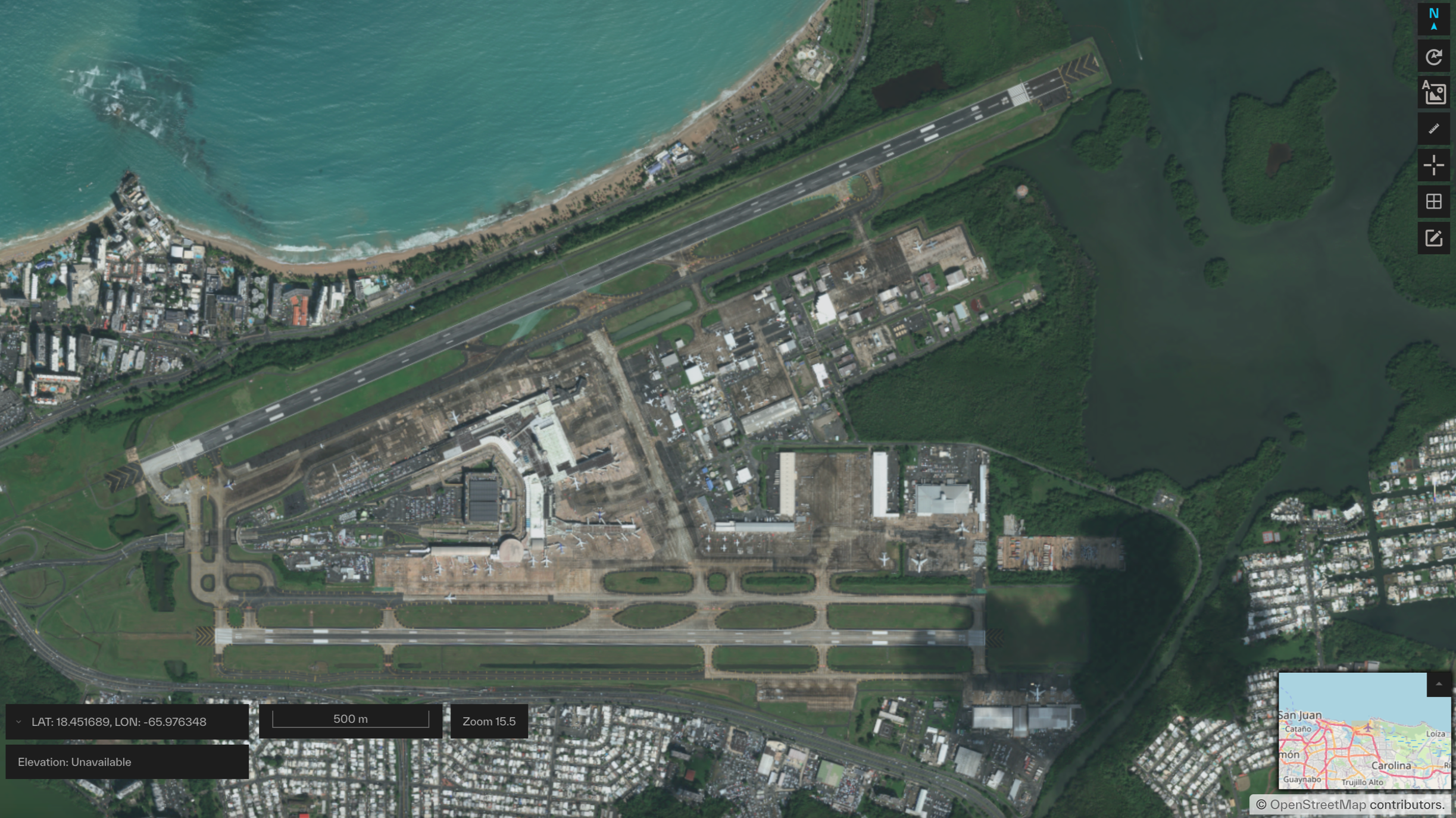
Before — high-volume data, no signal.
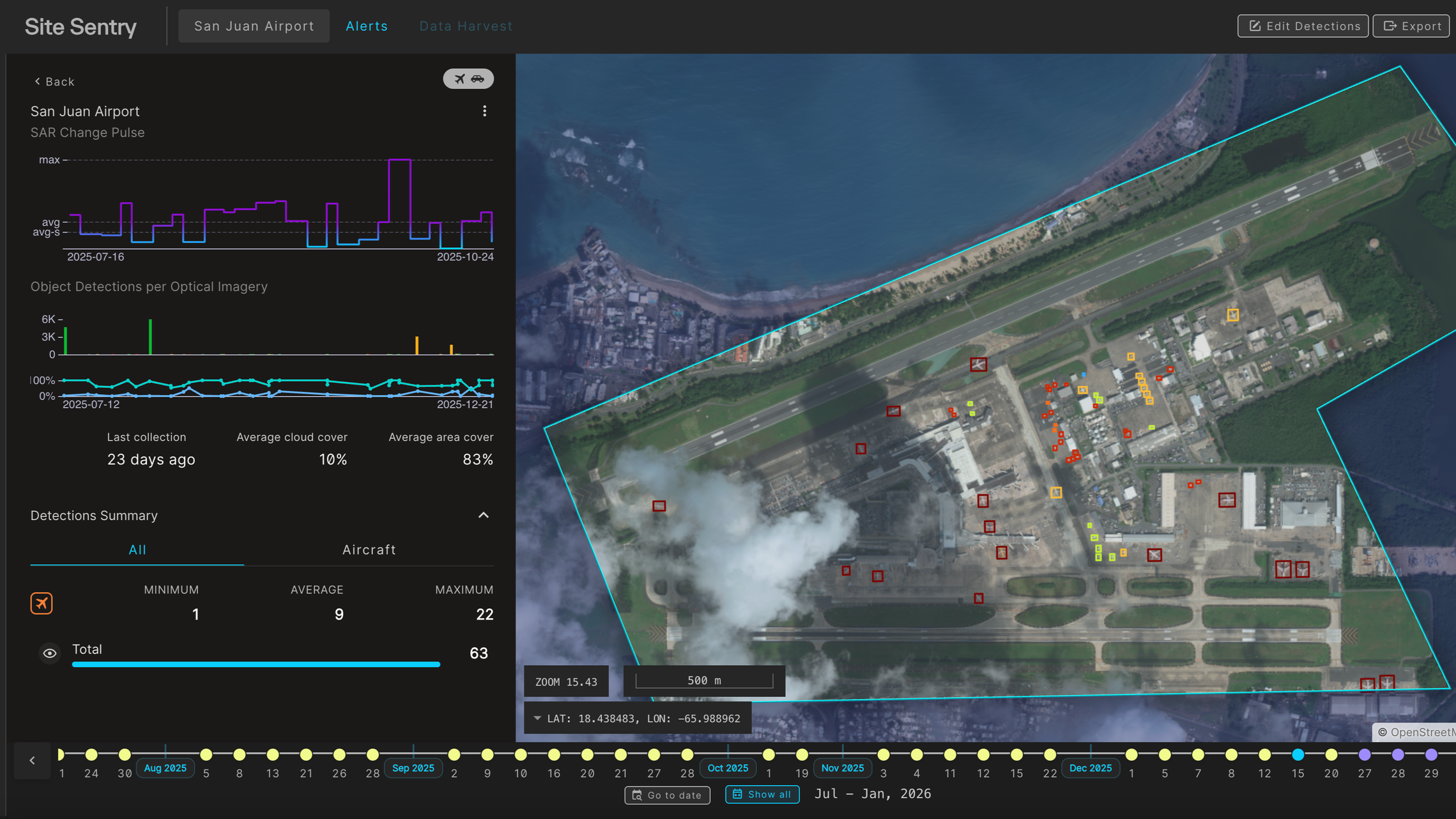
After — clear signal at decision speed.
Going live with Google raised the bar for how we shipped. We added observability, formal launch criteria, go/no-go reviews, and clearer release communication so the team could continue moving quickly without putting live customer workflows at risk.
Site Sentry was the priority because it was creating momentum behind the company's new direction. The portfolio challenge was deciding when to protect that momentum and when existing customers or the legacy platform required us to redirect capacity, knowing that every decision would slow something else down.
What this involved
- 7 months from concept to market
- Google as Site Sentry's first customer
- $145M sales pipeline generated by Site Sentry
- 23-person portfolio across infrastructure, applications, product, design, QA, and applied science
- Manual monitoring → proactive alerts based on change against a historical baseline
- Legacy modernization and integration carried in parallel with the new product
- Ongoing customer support maintained across the existing portfolio